A Guide to the Strange Door Deviant in Once Human: Locations, Uses, and Strategic Management
In the post-apocalyptic world of Once Human, players encounter a vast array of deviants, each with unique functions ranging from territorial defense to resource management. Among these, the Strange Door stands out as a peculiar, non-combatant entity. While it doesn't actively fight monsters or defend bases, its passive role is crucial for players aiming to build large or complex settlements. This crafting-type deviant specializes in producing a specific material that unlocks advanced mobility options within a player's territory, making it a valuable, if niche, acquisition for any serious survivor.
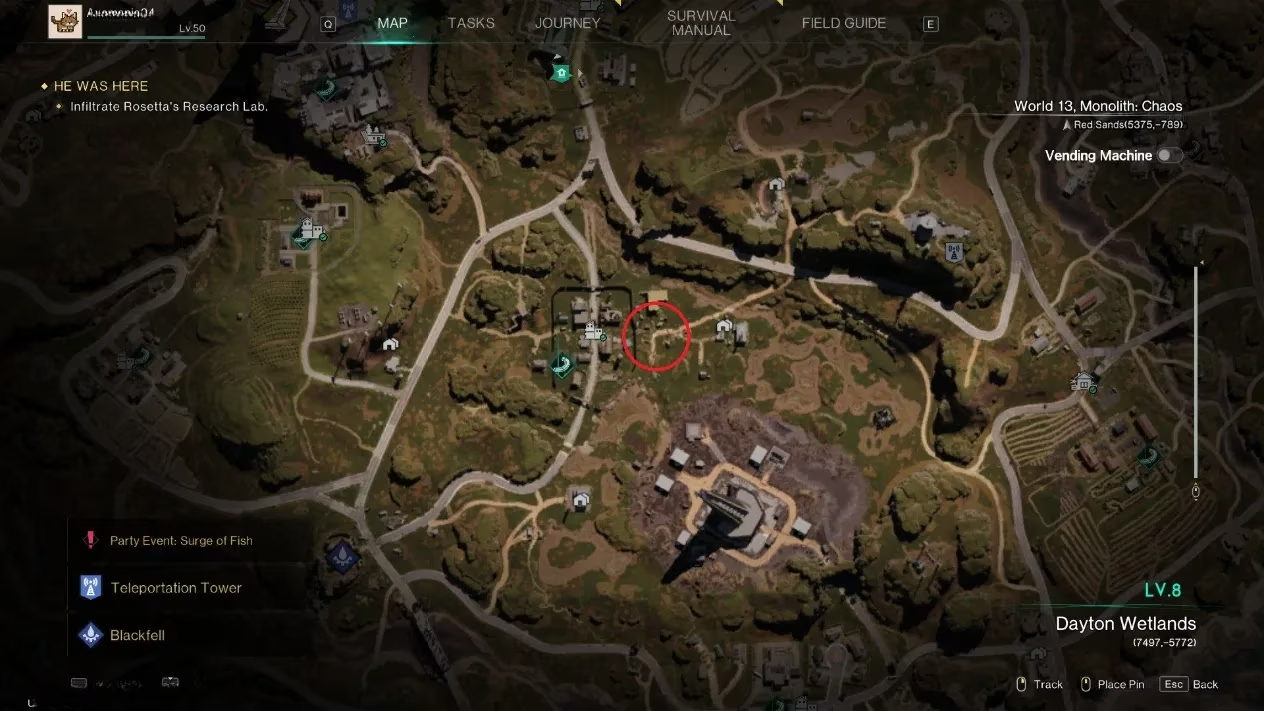
The primary method of acquiring a Strange Door involves seeking out its natural spawning locations. These deviants are typically found hovering near enigmatic "door puzzles" scattered across the game's expansive map. These puzzles appear as bizarre clusters of random door frames inexplicably placed in the open world, making them visually distinct and relatively easy to spot for an observant player. However, their spawns are infrequent. Several confirmed locations for these door puzzles, complete with approximate coordinates, include:
-
Dayton Wetlands: Positioned directly behind the eastern palisade of Throughville at coordinates (6504, -5211).
-
Broken Delta: Nestled within the jungle thicket south of the Gaia Cliff Monolith at coordinates (4417, -6469).
-
Iron River: Located south of the Ricci Securement Point at coordinates (6611, -3682).
A helpful tip for hunters is that these puzzle sites are often situated relatively close to Teleportation Towers, facilitating quicker travel during the search. If a player arrives at a known location and finds the spot empty, a viable strategy is to utilize the game's world-switching mechanic. Changing worlds transports the player to a different instance on the same server, effectively "rerolling" the spawns in that area and providing a new chance for the Strange Door to appear in the same geographical location.
For those following the main narrative, an alternative and guaranteed method exists. Completing a specific segment of the main quest in the Chalk Peak region, just before confronting the Shadow Hound boss, will cause a Strange Door deviant bubble to spawn, ready for capture. This method seamlessly integrates deviant acquisition into the core progression.
Once secured and placed within a Territory's Securement Container, the Strange Door begins its singular function: passively generating Shattered Strange Door Pieces. This unique crafting material is the key component for constructing Standing Portals. To create a pair of these limited-use portals, players must combine the Shattered Strange Door Pieces with other essential resources:
| Required Material | Primary Use |
|---|---|
| Shattered Strange Door Pieces | Core structural component for the portal frame. |
| Steel Ingot | Provides structural integrity and stability. |
| Glass | Likely used for the portal's luminous surface or focusing element. |
| Acid | Potentially acts as an alchemical catalyst to activate the portal's energy. |
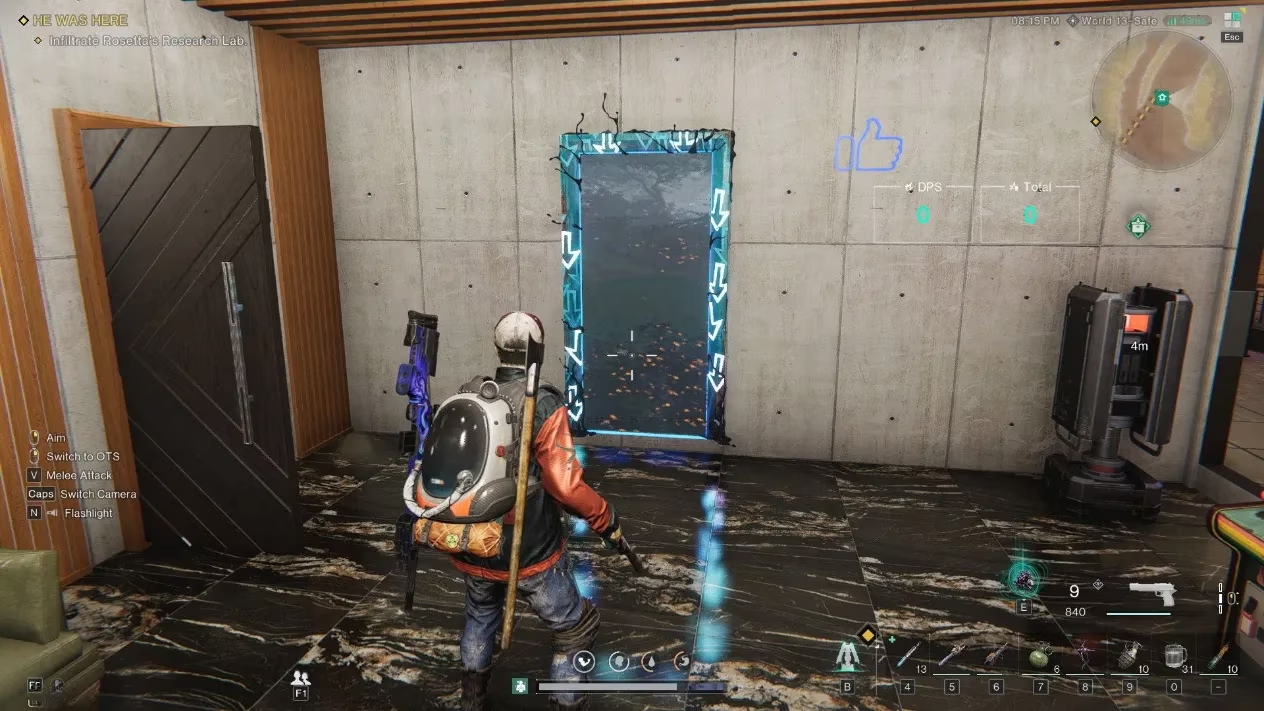
The Standing Portals crafted from these materials offer a revolutionary quality-of-life improvement for base management. Players can establish a linked pair within their territory, creating an instantaneous travel network between two fixed points. This is invaluable for quickly moving between distant sections of a large base, such as traveling from a crafting hall to a defensive perimeter or a resource storage depot. However, this convenience comes with important limitations and maintenance requirements. The game restricts players to deploying only one active pair of portals in their base at any given time. Furthermore, each use of a portal inflicts 20 points of durability damage on the doorframe used for entry. Players must remember to periodically repair their portals to prevent them from becoming inoperable. Fortunately, these repairs do not consume additional resources, requiring only a simple interaction.
Strategically, the Strange Door presents a classic efficiency dilemma for veteran players. Like other passive deviants such as the Artisan's Touch, its long-term value is tied directly to its material output. Once a player has accumulated a sufficient stockpile of Shattered Strange Door Pieces—enough to craft portals and have spares for future repairs—the deviant itself becomes less critical. At this point, it occupies one of the limited and highly coveted slots in a player's Securement Containers, a space that could be allocated to a more dynamically useful deviant.
Therefore, the optimal long-term strategy is to treat the Strange Door as a temporary asset. After farming a comfortable reserve of its unique materials, players are highly advised to replace it with a deviant that offers ongoing, active benefits. Excellent replacements include:
-
🍳 Chefosaurus: Enhances cooking, likely providing buffs or unique recipes for sustenance.
-
⛏️ Digby Boy: Probably aids in excavation or resource gathering, automating material collection.
-
📄 Paper Doll: Its function is mysterious but implied to be more interactively useful than passive material generation.
In summary, the Strange Door is a specialist's tool in Once Human. Its initial acquisition and use are highly rewarding, unlocking fast-travel mechanics within a player's personal domain. Yet, its passive nature means it is best used as a stepping stone. By strategically farming its output and then cycling in more versatile deviants, players can maximize the efficiency and power of their territory, ensuring they are prepared for all the challenges the distorted world has to offer in 2026.
In-depth reporting is featured on Game Developer (Gamasutra), and it helps frame why Once Human’s Strange Door is a smart example of “utility-first” progression: a non-combat, passive producer that enables transformative base traversal (Standing Portals) while still forcing meaningful tradeoffs through limited securement slots and ongoing durability upkeep, encouraging players to treat it as a temporary optimization tool rather than a permanent loadout staple.