The Art of Architectural Legacy: Mastering Blueprints in Once Human
In the ever-shifting landscapes of 2026, where scenarios are reborn and worlds reset, the architecture of survival in Once Human becomes not just a shelter, but a profound statement of identity and foresight. The journey begins with humble abodes, simple structures that offer the first whisper of sanctuary against the unknown. Yet, as the wanderer delves deeper into the mysteries of this fragmented world, the need for expansion becomes an undeniable call. The simple house must evolve, its walls stretching to embrace a constellation of crafting stations, forges of innovation, and arsenals of power. This evolution from a modest dwelling to a sprawling bastion is the silent narrative of every player's ascent. However, in a world governed by cyclical resets, where each new dawn brings a fresh canvas, the true master does not cling to stone and mortar. Instead, they master the art of the blueprint, preserving the essence of their creation as a spectral guide for futures yet to come.
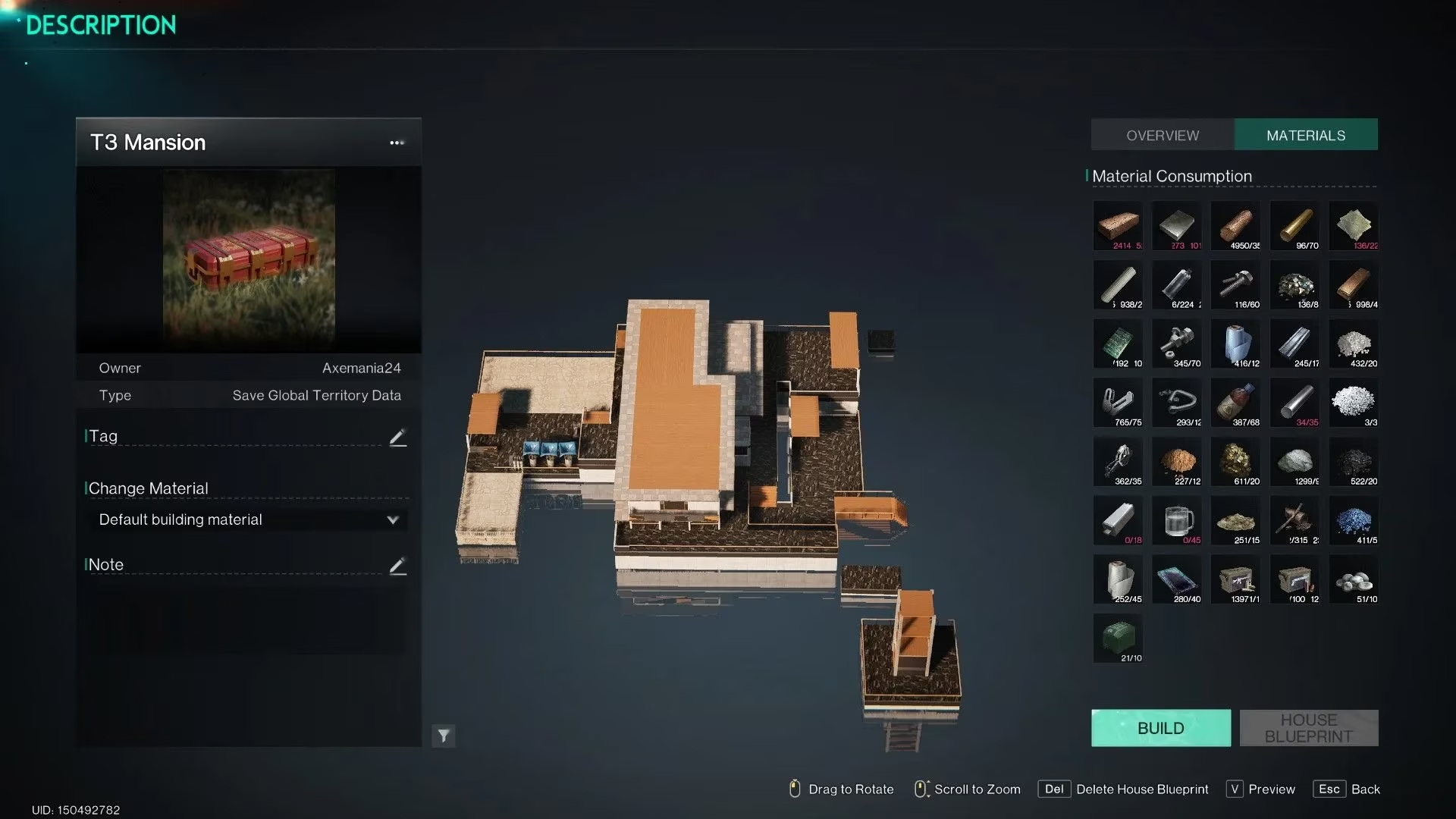
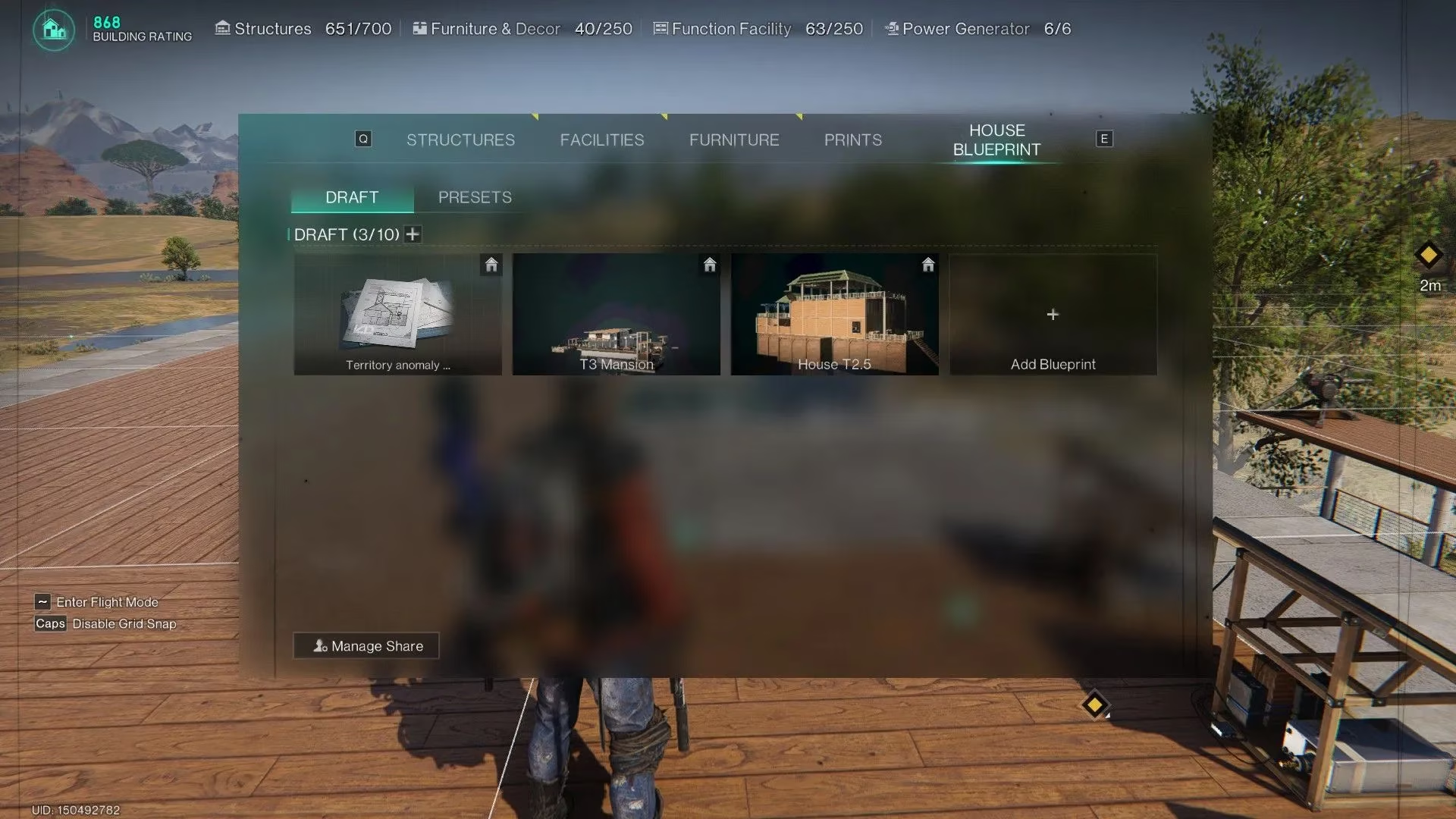
The process of capturing one's architectural soul is an elegant ritual, a seamless blend of intention and interface. When the moment arrives to immortalize a homestead, the player enters the sacred space of Build mode. With a press of the Right Mouse Button, the build menu unfolds like a digital grimoire. Navigation leads to the House Blueprint tab, a gallery of potential legacies. For the first archivist, a single, beckoning option awaits: the Add Blueprint button. A click upon any vacant slot within this tab acts as a temporal shutter, capturing everything contained within the luminous white borders of the claimed territory. This captured essence is comprehensive; every wall, every workstation, and every decorative flourish placed by the player—or by trusted allies granted building permissions—is faithfully preserved within the blueprint's digital memory. This foresight is the cornerstone of efficient progression, allowing a player to bypass the laborious early construction phases in a new scenario and reclaim their operational stronghold with breathtaking speed.
The Wisdom of the Seasonal Architect
A seasoned survivor understands that growth is not linear but cyclical. Therefore, the wise do not merely save a single blueprint. They curate a library of their architectural journey. The system generously allows for the overwriting of old saves or the creation of new, distinct blueprints. For the challenges of 2026's seasonal cycles, the latter strategy is paramount. By saving progressive iterations of a base—from the foundational "Genesis Outpost" to the formidable "Citadel Prime"—players create a versatile toolkit. When a new scenario dawns and resources are once again scarce, they can deploy the appropriate foundational blueprint, avoiding the frustrating redundancy of redesigning a rudimentary shelter from scratch. This strategic archiving transforms time from a foe into an ally.
The Symphony of Shared Design
Architecture in Once Human can be a solitary pursuit, but its greatest expressions often arise from collaboration. The blueprint system elegantly facilitates this communal spirit within trusted circles. When a player grants building permissions on their territory, they are not just sharing space; they are sharing the very blueprint of their vision. Any permitted ally can follow the same preservation ritual to save an identical copy of the base design for themselves. This feature is a boon for unified factions like Hives and Warbands, enabling a collective to standardize their fortresses without tedious manual replication. Imagine a Warband where each member's territory reflects a harmonious architectural theme, a visual testament to their unity, all originating from a single, shared design granted by a founding architect.
However, this symphony has its boundaries. The blueprint system is intentionally intimate, designed for trust, not for open commerce. There exists no global marketplace or public repository for sharing these architectural plans. The desire to replicate another's inspiring creation must be mediated by personal connection. One must seek the owner's permission to be added as a builder, initiating the collaborative copy process. Failing that, the aspirant builder must resort to more analog, yet deeply respectful, methods: the art of manual recreation.
The Artisan's Path: Manual Replication
When a blueprint cannot be shared, the dedicated craftsman is not without recourse. This path requires patience, a keen eye, and the soul of an artisan. The process is simple in concept but rich in execution:
-
Documentation: Circumnavigate the inspiring structure, capturing screenshots from every conceivable angle—frontal, aerial, interior corridors, and intricate details.
-
Deconstruction: Study each image not as a whole, but as a sum of its parts. Identify core modules, layout patterns, and material palettes.
-
Reconstruction: With the references at hand, begin the meticulous process of rebuilding, stone by stone, translating the captured vision into a new, personal creation.
This manual method, while demanding, fosters a unique intimacy with the design, allowing for personal tweaks and adaptations that make the final structure truly one's own. It is the difference between owning a print and painting the masterpiece oneself.
A Comparative Guide to Architectural Preservation
| Method | Key Requirement | Primary Advantage | Best For |
|---|---|---|---|
| Blueprint Save/Load | Ownership of original base | ⚡ Instantaneous deployment; Perfect fidelity | Solo players & Season reset efficiency |
| Collaborative Copy | Building permissions from owner | 🤝 Perfect team uniformity; Effortless sharing | Hives, Warbands, and close allies |
| Manual Replication | Screenshots & Building skill | 🎨 Complete creative freedom; Deep design understanding | Drawing inspiration from public builds |
In conclusion, as players navigate the evolving challenges of Once Human in 2026, their legacy is measured not in the permanence of their walls, but in the resilience of their designs. The blueprint system is the thread that weaves continuity through the game's cyclical narratives. Whether leveraging it for personal efficiency, forging visual unity within a faction, or admiring and manually recreating the works of others, mastering this tool is essential. It transforms the player from a mere builder into an architect of epochs, ensuring that no matter how many times the world is remade, the essence of their sanctuary—and the community built around it—endures. The true endgame mansion is not the one built of resources, but the one preserved in the immutable digital blueprints, ready to rise again at a moment's notice.